

A backyard elevation change can be as small as one step down from the patio or as dramatic as a slope leading to a pool, fire pit, or turf area. Either way, it should feel intentional. Well-built paver steps for backyard spaces turn an awkward grade change into a comfortable transition, while giving the entire landscape a finished, custom look.
For Phoenix-area homeowners, the decision is not only about appearance. Steps need to handle intense sun, sudden monsoon rain, active entertaining areas, and years of foot traffic without becoming uneven, slippery, or cracked. That is why the installation beneath each tread matters just as much as the pavers you see on top.
Start With the Grade, Not the Paver Color
A beautiful stair design cannot correct poor planning. Before selecting a color blend, wall block, or paver pattern, the backyard should be evaluated for its existing elevation, drainage path, and how people will move through the space.
The right location is usually the most natural route between destinations. A set of steps may connect a raised patio to an artificial turf play area, lead from a pool deck to a fire pit, or make a side-yard path easier to use. When steps are placed where people already want to walk, they improve flow instead of becoming an obstacle.
Drainage deserves equal attention in Arizona. Rain may be infrequent, but a heavy storm can move a surprising amount of water across a backyard in minutes. Paver steps should be graded and detailed so water drains away from the home and does not wash out the base, collect on a landing, or run across the walking surface.
What Makes Backyard Paver Steps Feel Safe
Comfortable steps are built around consistent proportions. A single step that is slightly taller, narrower, or sloped differently than the others can catch a foot, especially after dark or during a gathering. The rise and tread depth should be planned together, with broad, stable treads that make the transition feel easy rather than steep.
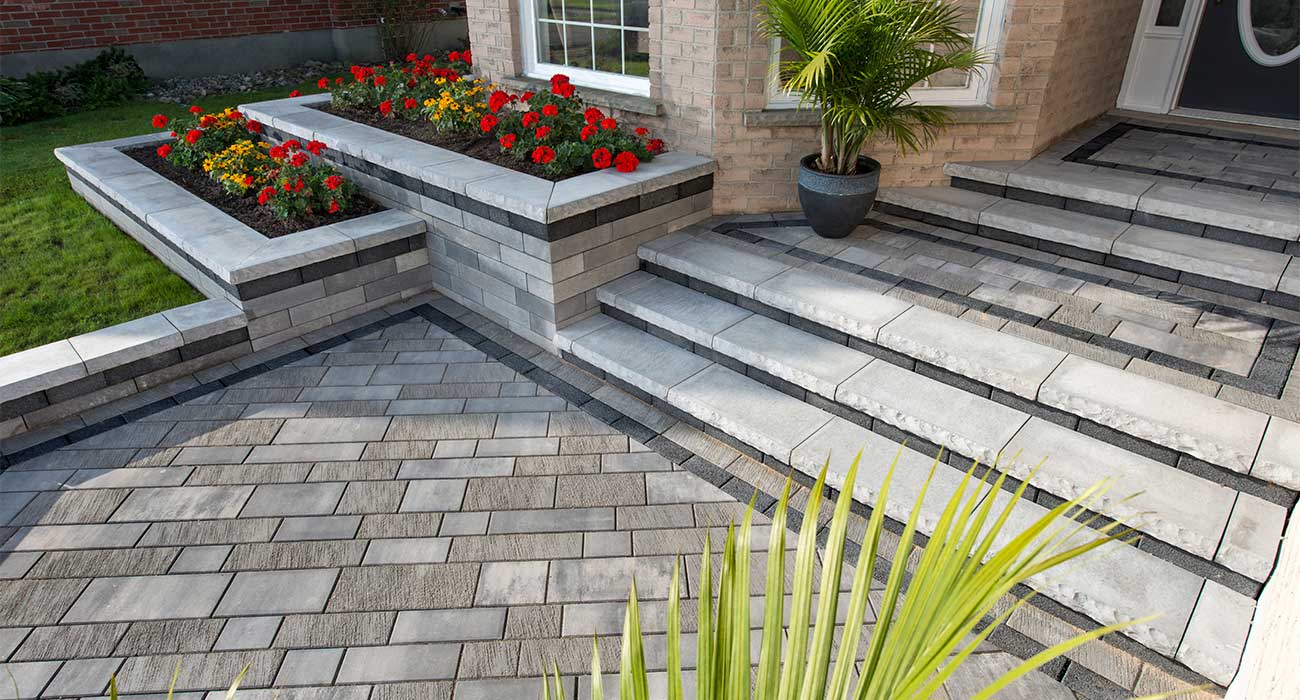
Landings are often worth the extra space. A level landing at the top, bottom, or midpoint of a stair run gives people room to turn, pause, carry food outside, or guide children and guests safely through the yard. It also creates an opportunity to connect the stair design visually to a patio, walkway, or pool deck.
Surface texture matters around pools and shaded areas. Many homeowners choose pavers because they offer more traction and design flexibility than a plain poured-concrete stair. The best material depends on the application. Textured concrete pavers, travertine, natural stone, and brick can all work beautifully when selected for the site and installed correctly. Around a pool, the priority is a surface that feels comfortable underfoot and performs well when wet.
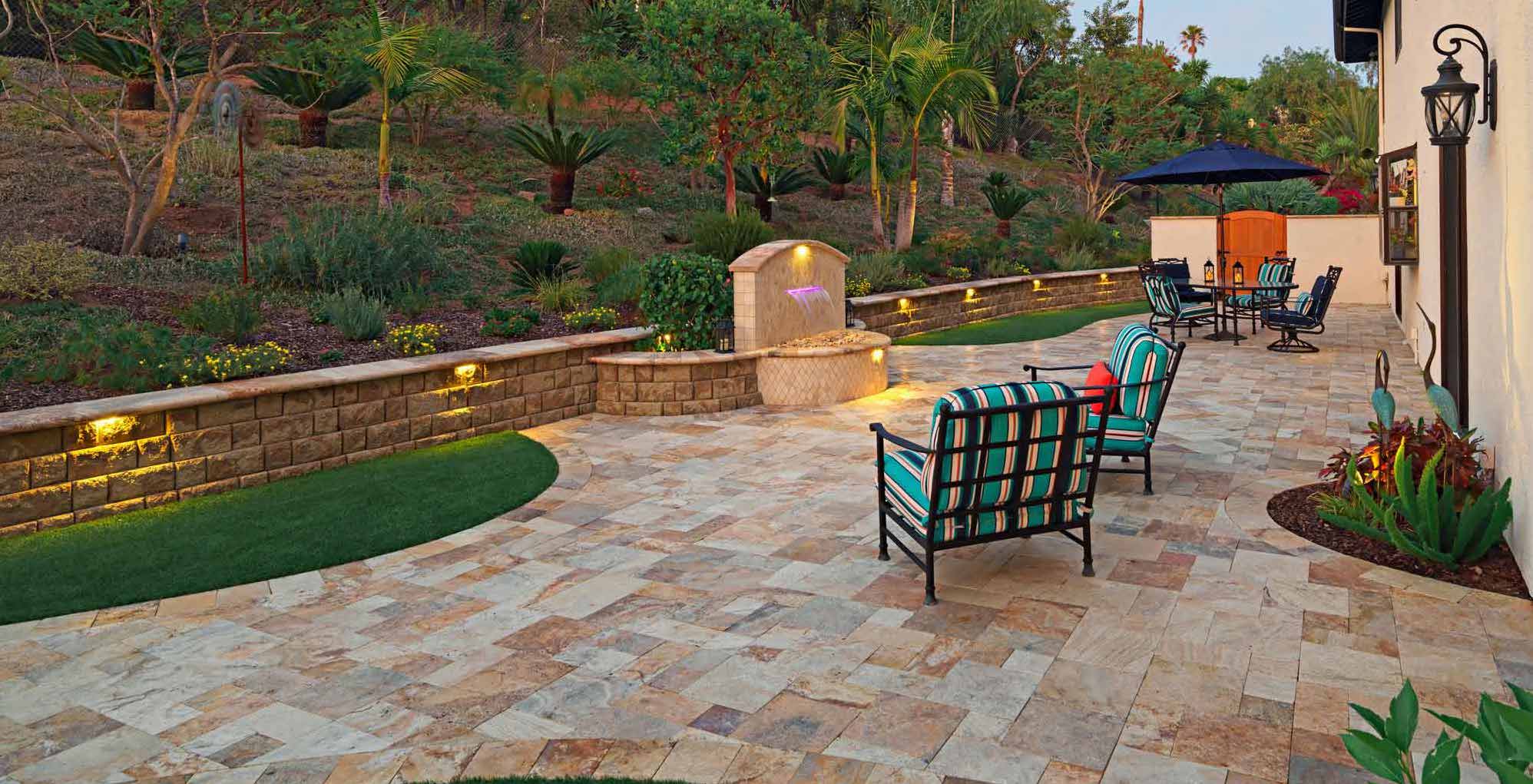
Lighting is another practical upgrade. Low-voltage stair lights, integrated wall lights, or carefully positioned landscape lighting can define each level without overwhelming the backyard. The goal is simple: guests should be able to see the edge of every step when the sun goes down.
Paver Steps for Backyard Patios, Pools, and Slopes
Paver steps are not a one-size-fits-all feature. The strongest designs respond to the use of the space and the amount of elevation being managed.
Patio-to-yard transitions
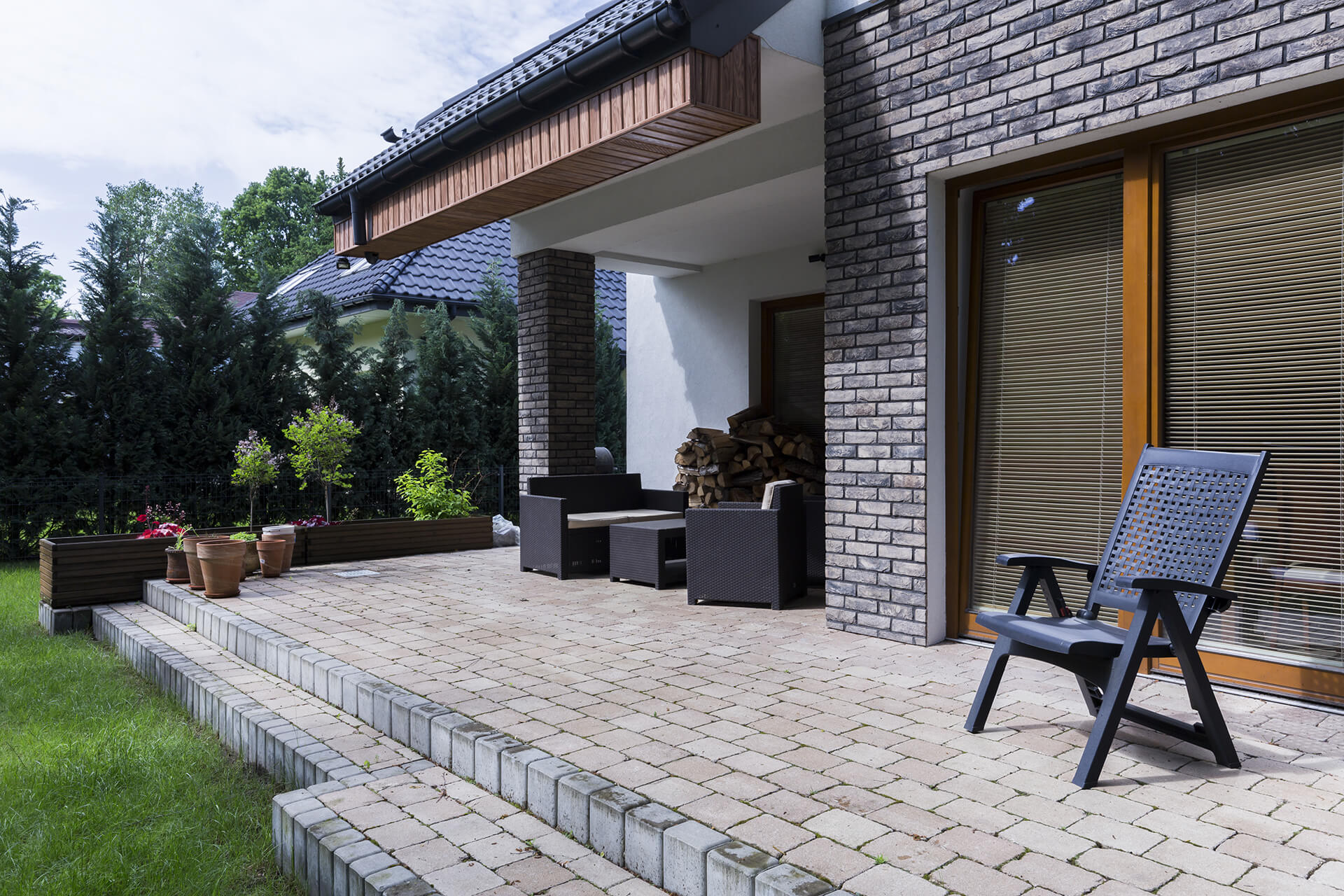
If a patio sits a few inches above the surrounding turf or gravel, a wide single step can create a clean, open transition. This approach works especially well for entertaining spaces because it avoids the boxed-in appearance of narrow stairs. Using a contrasting border or coordinating wall cap can make the edge more visible while tying it into the patio pattern.
Raised fire pits and seating areas
A raised paver or masonry fire pit area often benefits from broad steps on one or more sides. The steps can double as casual seating when designed with the right depth and finished with a comfortable cap. This layout makes the space feel welcoming and gives a larger group more ways to gather around the fire.
Pool deck connections
A pool area may need steps that bridge a change in elevation between the house, patio, spa, or yard. Here, clean drainage and slip resistance are especially important. A professional design can use matching pool-deck materials while defining the stair edges clearly enough for wet feet and nighttime use.
Backyard slopes and retaining walls
When a property has a meaningful slope, paver steps are often part of a larger retaining-wall solution. The wall holds back soil while the stair run gives the yard a usable route from one elevation to another. This is where professional planning matters most. The wall, stair base, drainage, and surrounding grading need to work as one system, not as separate add-ons.
The Work Below the Surface Protects Your Investment
A paver stairway is only as durable as the base supporting it. Arizona soils, irrigation overspray, settling, and temperature changes can expose shortcuts quickly. Simply placing pavers over loose dirt or a thin layer of sand may look acceptable at first, but the steps can shift, separate, or settle over time.
A workmanship-first installation begins with excavation to the proper depth. The crew then prepares and compacts a stable aggregate base, sets elevations carefully, and establishes the drainage plan before the visible finish materials go in. Edge restraint, precise cuts, and properly secured wall components help each step keep its shape through daily use.
This preparation is particularly valuable when steps meet a retaining wall or raised planter. These features carry soil loads and need thoughtful construction, not just decorative facing. Done properly, the finished result looks simple because the complicated work has been handled underneath.
Segmental paver systems also offer a practical advantage over basic poured concrete. Individual units can accommodate minor movement better than a single slab, and repairs can be more targeted if a future issue occurs. That does not mean pavers are maintenance-free. They still need occasional inspection, cleaning, and attention to joint sand or drainage. It does mean a properly installed system is designed for long-term service and repairability.
Choose Materials That Belong With the Rest of the Backyard
The best paver step material usually relates to the surrounding hardscape rather than competing with it. Matching the patio exactly creates a unified look. Using a complementary cap, border, or color blend can add definition without making the steps feel disconnected.
In a modern Scottsdale backyard, large-format pavers paired with clean-lined wall caps may suit the architecture. A more traditional home in Mesa or Gilbert may call for tumbled pavers, warm earth tones, or a natural-stone accent. Travertine can bring an elevated poolside look, while concrete pavers offer a wide range of colors, shapes, and budget options.
Color should be considered in full Arizona sun, not only from a sample board indoors. Lighter tones may feel cooler underfoot but can show dirt more readily. Darker colors create contrast and drama, but can absorb more heat. The right choice depends on shade, pool use, existing exterior finishes, and how much maintenance the homeowner wants to take on.
Avoid the Common Backyard Step Shortcuts
A few details separate a lasting installation from one that needs attention too soon. Inconsistent riser heights, undersized treads, missing drainage, loose edge restraints, and inadequate base compaction are common problems. So is designing stairs before the final patio and wall elevations have been established.
Homeowners should also be cautious about treating steps as a last-minute landscape feature. Once a patio, pool deck, turf border, or retaining wall is installed, retrofitting the correct stair layout can be more difficult and more expensive. Planning the full backyard circulation early leads to a cleaner design and a more accurate project estimate.
For projects involving substantial retaining walls, complex slopes, or property drainage concerns, local requirements and engineering considerations may apply. A qualified contractor can identify those needs before construction begins, rather than after materials are already on site.
Build a Backyard That Invites People Outside
The right steps do more than get you from one level to another. They make a patio feel connected to the lawn, turn a sloped corner into usable space, and help your pool or fire-pit area function as one complete backyard. Liberty Pavers designs and installs custom hardscapes with the preparation, material selection, and finishing details needed for Arizona outdoor living.
If your yard has an awkward grade change or an unfinished transition, start with a clear plan and a fixed quotation. A well-designed set of paver steps can be the detail that makes the rest of your backyard feel like it was built to be enjoyed.